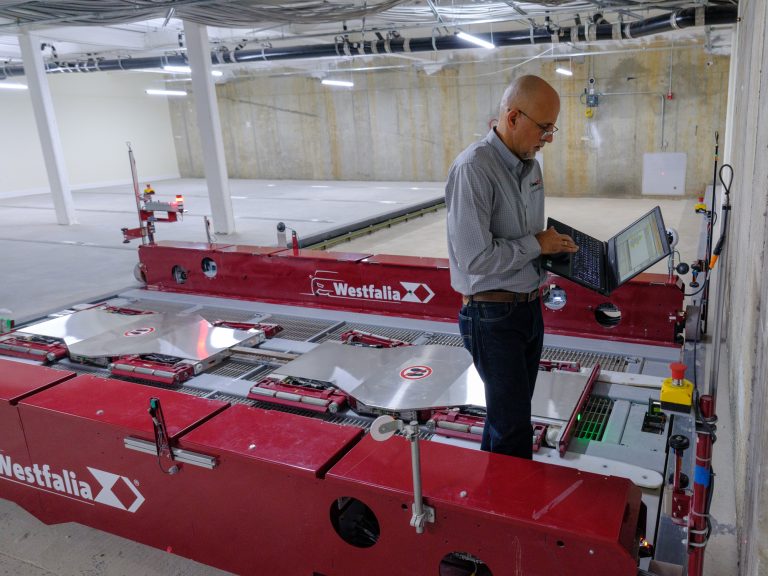
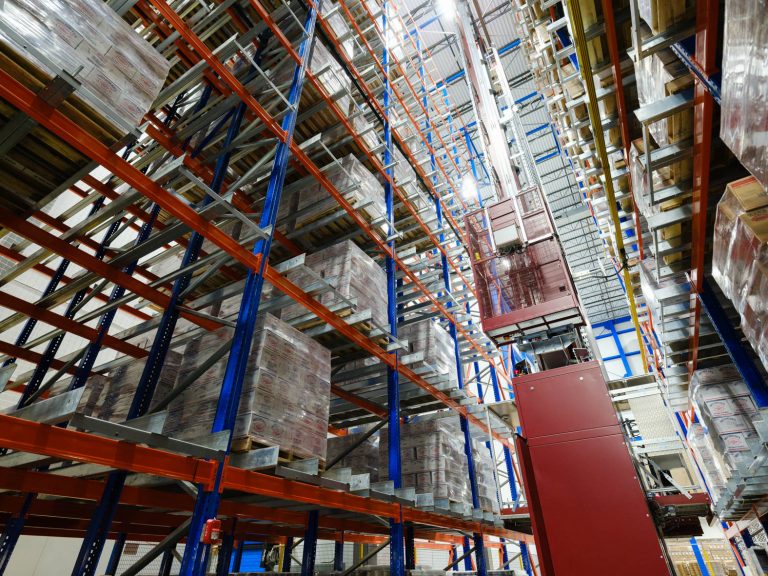
Practicing What We Build: A Goods-to-Person SRM on Our Assembly Floor

We Designed Our Own Goods-to-Person Production System: What’s Taking Shape in Our Shop
A cluttered production floor is a slow production floor. Components scattered across workstations, assemblers walking to retrieve parts, space consumed by stock that belongs somewhere else, these aren’t minor inconveniences. They compound into real throughput loss, shift after shift. We decided to solve it the way we solve it for our customers: with engineered automation.
The Problem We Set Out to Fix
Our assembly operation required a smarter material flow. Assemblers needed the right components staged at their workstations, organized and complete, without consuming valuable floor footprint with loose bins and open stock. The conventional approach (shelving, floor stacks, manual retrieval) doesn’t scale with the precision our builds demand. We needed a goods-to-person system, so we built one.
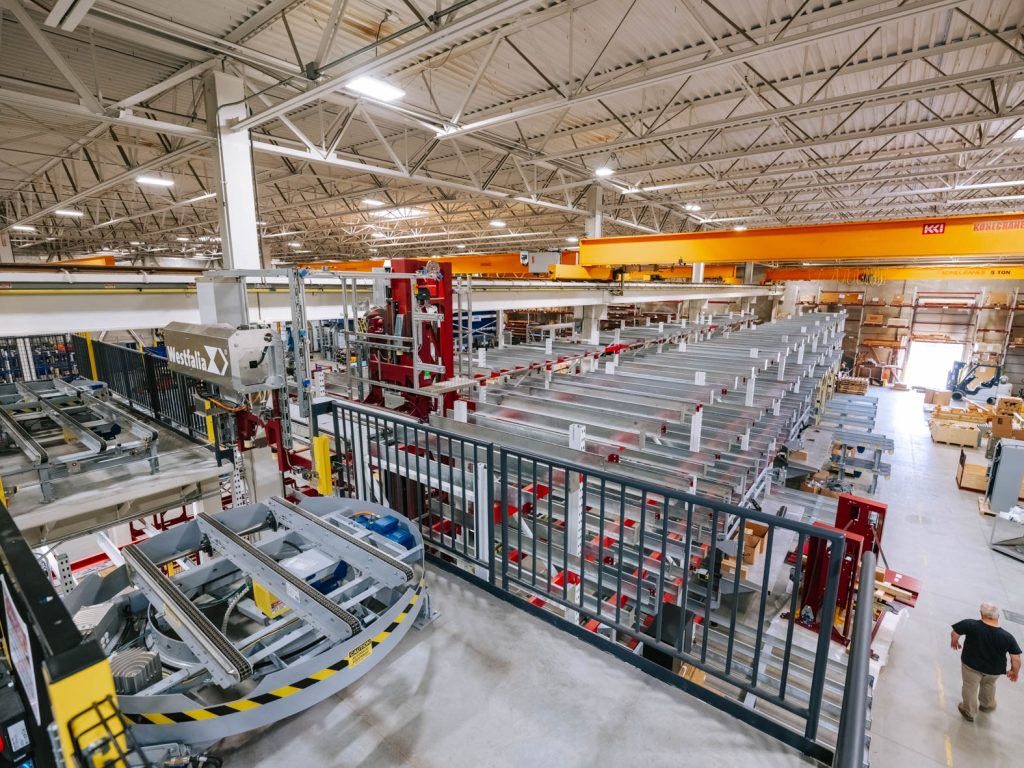
Introducing Our Production SRM
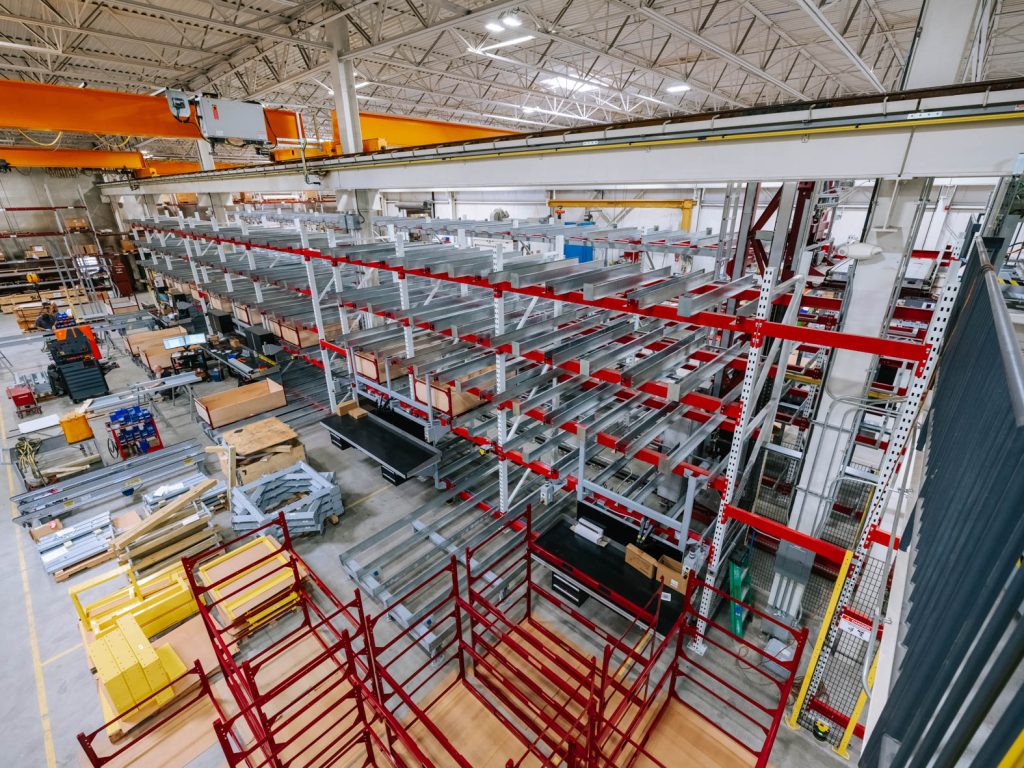
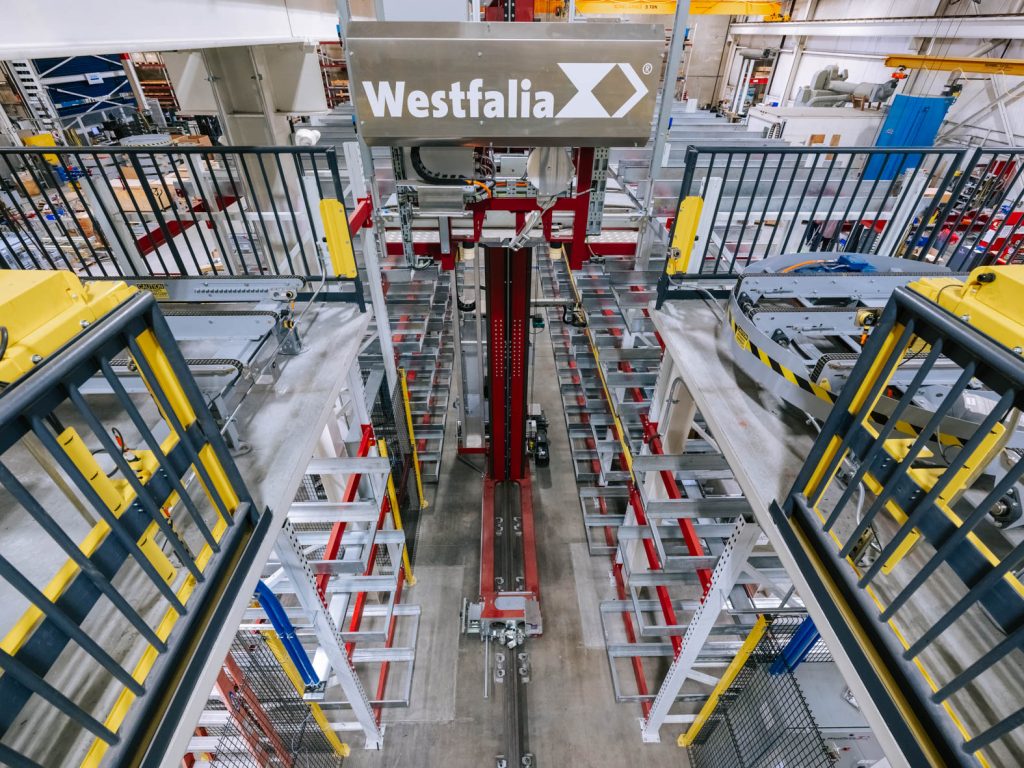
The machine currently in our shop is a purpose-built SRM (storage retrieval machine), a high-density production crane designed specifically for our assembly floor. It operates on a goods-to-man principle: instead of assemblers traveling to retrieve components, the crane retrieves and delivers. The system retrieves custom kit crates, designed and built in-house, and brings them directly to the assembler. Each crate contains every component required for a specific build, kitted and organized before it ever reaches the workstation.
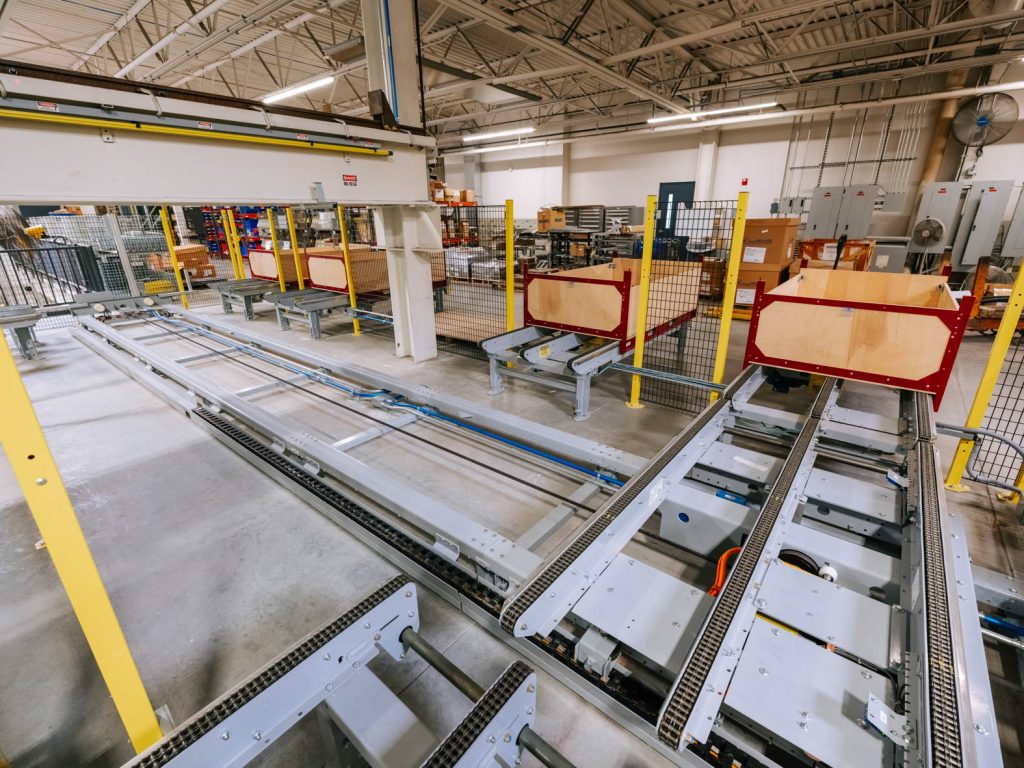
What the Kit Crate System Changes
The kit crate is the operational unit that makes the whole system work. Rather than assemblers sourcing individual parts from multiple locations, each crate arrives pre-loaded with the complete component set for a given assembly. The crane delivers the crate, the assembler builds, and when the job is done, the crate returns. The outcomes are measurable:
- Denser floor utilization: component storage moves into the SRM’s vertical footprint, freeing floor space for productive assembly work
- Tidier workstations: assemblers work from a single, organized kit rather than a growing spread of loose parts
- Faster builds: no time lost sourcing, gathering, or searching
- Cleaner operation overall: a more orderly floor is a more efficient and safer floor
Where We Are Now
The solution is nearly complete in our shop. The structural elements are in place, the crane is installed, and we’re moving through the final stages of commissioning. We’ll publish a full operational walkthrough once the system is live: how the kit crates are designed, how the SRM integrates into the assembly workflow, and what the floor looks like in practice. Automating material flow is the core of what we do for our customers, and this production crane is a direct extension of that work applied to our own operation.
If your production or assembly floor has the same problems we’re solving here (components spread too wide, production teams spending too much time retrieving instead of building, floor space lost to staging), this is a conversation worth having. Reach out to discuss what our goods-to-person system could look like in your operation.
Check back here to stay current on what’s happening inside Westfalia Technologies. Follow along as we build, commission, and operate the systems we design.